



What does meeting culture mean?
Meeting culture refers to the values, principles and habits that govern how meetings are planned, conducted and followed up within an organisation. Studies show that around 30% of all working time is spent in meetings, and for managers, that figure can be as high as 50–90%. What’s more, meeting time has doubled over the last 20 years! A good meeting culture can free up this time and make meetings more productive.
The benefits of a sustainable meeting culture
- Time savings on internal meetings.
- Clear internal communication.
- Meetings become positive cultural carriers.
- A better working environment and more job satisfaction.
- Greater implementation power in every meeting.
- Greater employee engagement, which in turn leads to more motivation.
Why do meetings become ineffective?
There are often two main problems with meetings:
- The meeting itself is inefficient. It lacks a clear agenda, purpose, and structure. Participants are poorly prepared or arrive late.
- Wrong meetings are held with the wrong people. Meetings are held for things that could just as easily have been communicated via email or chat. Too many people are invited, making meetings protracted and difficult to focus.
Signs of a poor meeting culture
- There is no meeting policy, and there are no guidelines on how meetings should be conducted.
- The agenda and purpose are unclear, participants do not know why they are there or what is to be achieved.
- A culture of silence where participants dare not point out shortcomings or ask questions.
- Bad habits are being normalised and it's okay to be late, run over time or be unprepared.
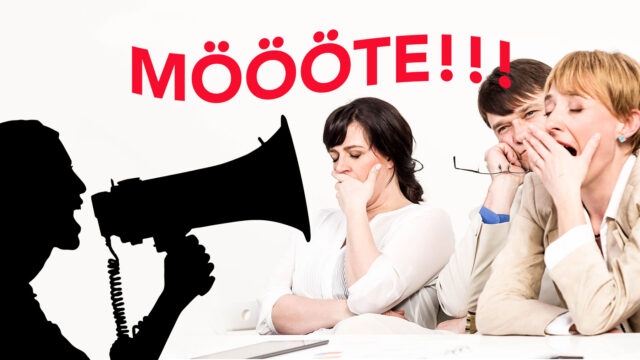
- Remote meetings without engagement, where cameras are off and participants appear uninterested.
How can meeting culture be improved?
There are many ways to improve meeting culture. Some examples include:
- Discuss how you want meetings to function in your workplace.
- Define frameworks and expectations for how meetings should be planned, conducted, and followed up.
- Ask yourselves if every meeting is necessary, is it really essential to meet? Can the information be shared in another way?
- Invite the right people, ensuring only those needed to make decisions or contribute to the discussion are involved.
- Create a clear agenda that includes purpose, objectives, points, and timings.
- Read through the agenda and bring relevant material.
- Respect the allocated time for the meeting.
- Keep the focus on the agenda and avoid tangents and irrelevant information.
- Create an inclusive environment where everyone can contribute.
- Communicate clearly and make decisions that are easy to understand.
- Review decisions and actions before the meeting ends.
- Ask participants for feedback and use it to improve future meetings.
In this article We'll delve deeper into how to plan a successful conference.

The responsibility employees have
As a colleague, you have a responsibility to contribute to an effective meeting culture. Always ask about the purpose of the meeting to ensure you are attending for the right reason. Request the agenda in advance so that you can prepare yourself and contribute in the best possible way. Arrive on time and show commitment by participating actively in discussions and respecting other attendees.
Finally, provide feedback on meetings to let management know what worked well and what could be improved. By taking responsibility and actively participating in meetings, you can create a better meeting culture for the entire organisation.
It is important to remember that a good meeting culture is an investment in time and energy that yields many positive effects for the organisation and its employees.
Do you have any more questions about meeting culture? Here at IVA Conference Centre, we have hosted many meetings and conferences over the years; please don't hesitate to ask. contact us We're happy to help!
Frequently Asked Questions about Conferences and Meetings
Preparation and planning are key. Think about the purpose and objectives of the participants who will be attending. Book any speakers and the most suitable venue for the meeting early on
The content of a conference determines the length of the meeting. It is better to have few items on the agenda that can be completed in time than to add too much that has to be moved to the next meeting. Keep the times for each item and move on. Book a new meeting for what took too long.
Send an evaluation directly or the day after to the participants with well-chosen questions. Preferably have a scale of 1-10 to be able to measure the whole. Ask for feedback on the most important things the participant has taken away.
The purpose of the meeting depends on what is to be communicated. It can be an information meeting, a decision-making meeting, a creative workshop or a training session.