



How to host a wine tasting event: 11 things you need to know
Thinking about organising a wine tasting? Organising a wine tasting is about more than choosing the right wines - it's an experience that requires planning, knowledge and flair. A well-thought-out programme creates the best possible conditions for both taste and conversation. In this article, we have gathered 11 things to consider when planning a wine tasting event.
1. Find the right place for the experience
The environment sets the tone for the whole evening. A calm and bright room with good acoustics and seating that suits the layout makes a big difference. It should be easy for guests to focus on the flavours - without distractions. At IVA Conference Centre we are used to arranging wine tastings in our flexible premises with everything needed, from technology to serving. With Restaurant Grodan as a partner, you also have access to knowledgeable sommeliers and first-class service.
2. Invite just enough people
Wine tastings are best done in smaller groups. 8-12 people are often enough to create a pleasant and intimate atmosphere, where everyone can participate in the conversation without it getting messy. Fewer people also make it easier to adapt the content, keep the pace together - and refill the glasses with care.
3. Choose wines with care
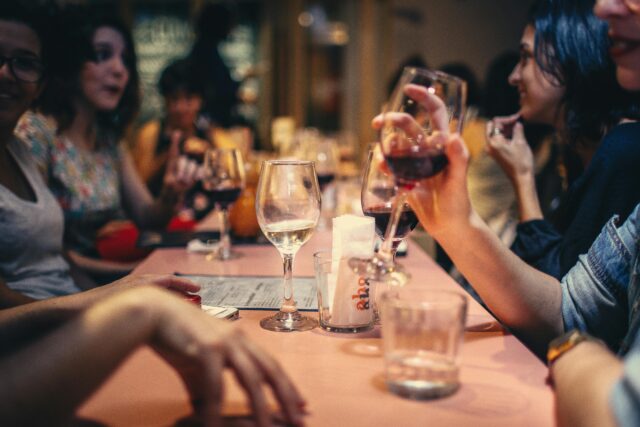
Choosing wines is a fun but important part of planning. What do you want your guests to experience? Classic grapes from well-known wine countries often work well, especially for those who taste wine less frequently. For more knowledgeable participants, narrower themes can be exciting:
- organic or biodynamic wines
- a specific wine country or district
- the same wine from different vintages.
An experienced sommelier can provide both expertise and commitment throughout that process.
4. Count the right amount of wine
You don't need a full bottle per guest - quite the opposite. Wine tasting is about tasting, not drinking. Expect one bottle to be enough for 10-12 tastings, depending on the amount in the glass. For a tasting with 5-6 wines and 10 participants, 6 bottles are usually enough.
Want to offer a glass of your favourite wine afterwards? Plan to have an extra bottle of your favourite.
5. Get help from a sommelier
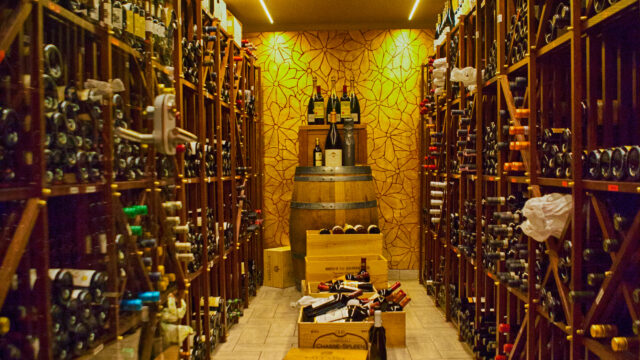
A wine tasting is greatly enhanced by someone who can lead it with both knowledge and empathy. A sommelier sets the tone, arouses curiosity and helps guests to feel, smell and taste in a completely new way. At the Grodan restaurant There are knowledgeable sommeliers with whom we are happy to collaborate on wine tastings at the IVA Conference Centre - a safe resource that ensures that everyone feels included, regardless of prior knowledge.
6. Choose the right glass
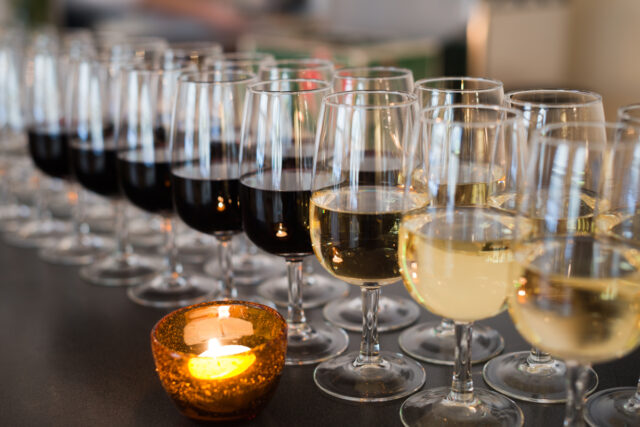
Not all wine tasting glasses are created equal. Red wines often require larger cups, while white wines are better flavoured in narrower glasses. Sparkling wines do best in narrow flute glasses that preserve the bubbles.
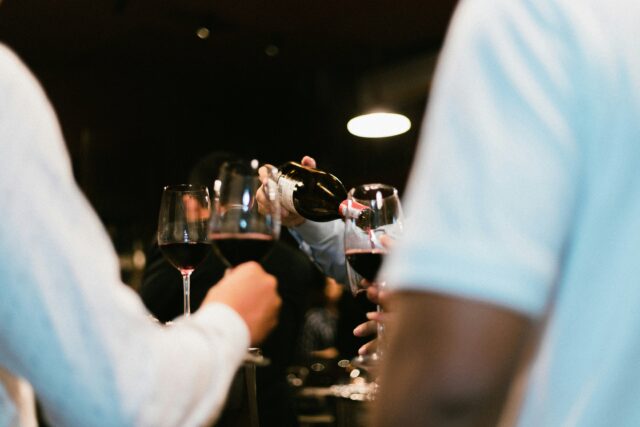
Don't have all the types? No problem - a classic tulip-shaped glass works well with most things. The most important thing is that everyone gets the same type of glass, so the comparison is fair. If you choose to hold your wine tasting with us at IVA Conference Centre, we'll make sure you have every type of glass you need on site!
7. Have a simple introduction to grapes
Not everyone knows the difference between a chardonnay and a riesling - but it can be a fun part of the tasting. A short introduction to each wine or grape you've chosen to serve will give guests something to hang their experience on. For example, you could mention:
- Origin, e.g.: "This is a pinot noir from Burgundy".
- Style: light and fruity or powerful and barrel-aged.
- What characterises the grape.
8. How to taste wine
If you prefer to do the wine tasting yourself rather than having a sommelier lead, here is a simple guide that will enhance the experience for all participants, especially if they have not done it before. The guide should be relaxed but informative:
- Look at the wine and think about its colour and clarity. Is it deep red or bright and fresh?
- Swirl the glass gently, it releases the aromas and gives a first sense of the complexity of the wine.
- Take a whiff and try to identify the scents that emerge. Fruity, floral, spicy?
- Take a small sip to taste and let the wine roll around in your mouth. Does it feel soft or powerful? Is there any aftertaste?
- Discuss once everyone has tasted and talk about what you felt. What was most surprising? What did everyone like?
Guiding in this way makes the tasting more interactive and engaging for all participants, and is a fun way to give them an insight into the world of wine.
9. Create flavour bridges with the right snacks
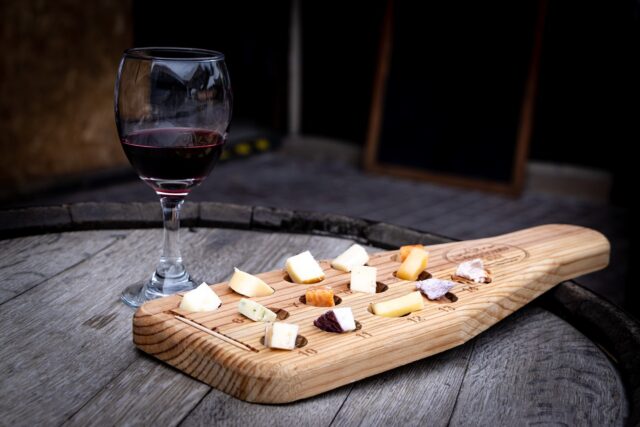
Even if the tasting is not a dinner, small snacks can enhance and nuance the flavours of the wine. Think neutral: bread, natural cheese or slices of apple help to 'zero in' on the flavours between wines. Want to take it a step further? Pair each wine with an appropriate flavour - like chèvre with sauvignon blanc or truffle salami with a pinot noir.
Want help with pairings? Restaurant Grodan is a great resource!
10. use wine tasting sheets
Giving guests a wine tasting sheet is an easy way to make the tasting more interactive. It helps participants remember which wines they tasted - and what they thought of them. It also makes the conversations around the wine more engaging - and sometimes a little surprising.
You can create your own template or download ready-made options, where guests can tick everything from scent notes to ratings.
11. finish by letting the guests choose their favourite
After the final tasting - why not ask guests to vote for their favourite? It creates a light-hearted ending and something to gather around. For example, the wine with the most votes can be served an extra glass of, or lifted as the 'bubbly of the evening'. A small gesture, but a memorable one.
Would you like help organising your first wine tasting? You are very welcome to contact us at the IVA Conference Centre - we look forward to helping you create an unforgettable tasteful event!